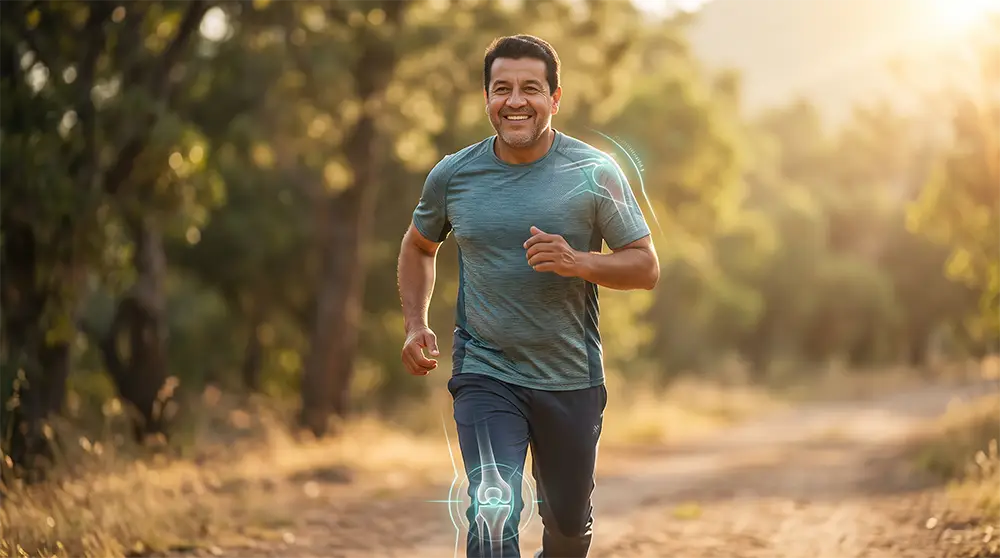
Athletes and physically active individuals continually push their physical boundaries. However, intense physical activity often leads to severe musculoskeletal trauma. Millions of active adults suffer from torn rotator cuffs, meniscus tears, chronic tendinopathy, or ligament strains every year. Unfortunately, traditional orthopedic treatment pathways frequently present frustrating roadblocks.
Patients often receive cortisone shots that only mask localized symptoms temporarily. Furthermore, repeated steroid injections degrade connective tissue integrity over time. When conservative care fails, orthopedic surgeons usually recommend invasive reconstruction procedures. Yet, major joint surgery entails lengthy rehabilitation windows, persistent stiffness, and permanent biomechanical alterations.
Consequently, active adults are demanding superior biological alternatives. Stem cell therapy for sports injuries has transformed modern orthopedic rehabilitation. At Kyron Medical, under the specialized guidance of Dr. Carlos Rojas, we deploy high-potency umbilical cord Mesenchymal Stem Cells (UC-MSCs). Our targeted cellular protocols accelerate connective tissue synthesis, soothe chronic inflammation, and help you return to active living without surgical intervention.
Regenerative Orthopedic Protocol Overview
Common Sports Injuries Addressed by Regenerative Protocols
Musculoskeletal trauma involves complex soft-tissue structures that possess naturally poor vascular supply. When high mechanical stress exceeds tissue elasticity, micro-tears develop into chronic degenerative lesions.
Our specialized orthopedic team applies advanced cellular protocols across several primary pathologies:
1. Rotator Cuff Tears and Tendinopathy
The rotator cuff consists of four muscles and stabilizing tendons supporting the shoulder joint. Repetitive overhead movements or acute trauma frequently cause supraspinatus tears. Traditional surgical suturing requires six to nine months of painful recovery. In contrast, targeted stem cell infusions stimulate local tendon-to-bone integration, promoting natural cellular closure of partial tears.
2. Knee Meniscus and Ligament Damage
Meniscus tears and partial anterior cruciate ligament (ACL) sprains represent common athletic setbacks. Because the inner two-thirds of the meniscus lacks direct blood flow, natural healing remains exceptionally slow. Mesenchymal stem cells deliver potent growth factors directly into the synovial capsule, stimulating fibrocartilage repair.
3. Chronic Tendinitis (Achilles, Patellar, and Tennis Elbow)
Overuse injuries frequently trigger tendinosis, characterized by collagen disorganization rather than acute inflammation. Stem cell therapy resets the cellular repair cycle. Specifically, active cells stimulate type-I collagen deposition, restoring structural tensile strength to damaged tendons.
4. Articular Cartilage Defects and Early Osteoarthritis
High-impact sports accelerate focal cartilage wear, leading to painful bone-on-bone friction. While articular cartilage cannot self-repair easily, high-potency MSC protocols stimulate chondrogenic differentiation. Consequently, this intervention preserves the joint space and halts progressive joint degeneration.
The 4 Stages of Cellular Athletic Rehabilitation
Precision Diagnostic Mapping
Dr. Carlos Rojas reviews detailed joint imaging to map the precise anatomical boundaries of your soft-tissue lesion.
Image-Guided Cellular Delivery
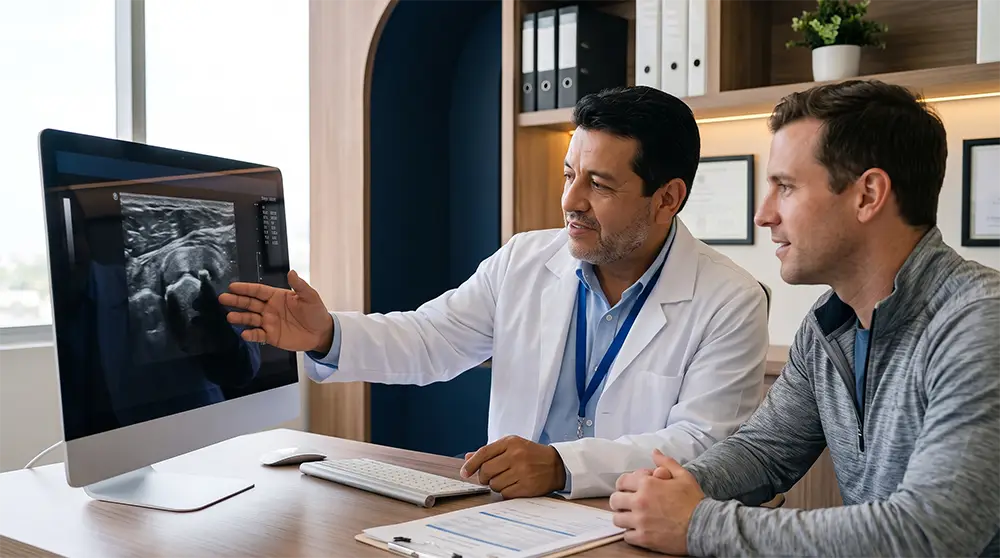
We introduce millions of active MSCs directly into the injured tendon or ligament sheath using high-definition ultrasound guidance.
Systemic Anti-Inflammatory IV
High-dose intravenous cellular infusion calms systemic joint wear and optimizes athletic tissue vascularization throughout the body.
Progressive Functional Loading
We provide a structured biomechanical re-entry guide, coordinating with your personal trainer for safe, accelerated return to sport.
Biological Mechanisms: How Mesenchymal Stem Cells Restore Connective Tissue
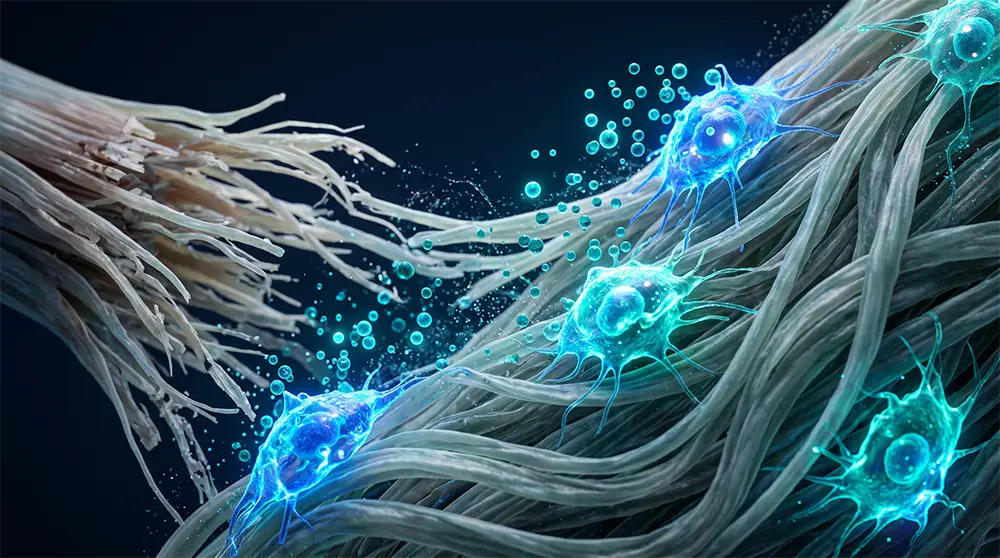
Mesenchymal stem cells derived from umbilical cord Wharton’s Jelly possess superior regenerative characteristics. Because these youthful cells have never experienced environmental stress, they exhibit intense biological vitality.
When administered into injured joints and tendons, UC-MSCs facilitate healing through three primary cellular pathways:
1. Extracellular Matrix Reconstruction
Connective tissues rely on a dense matrix of collagen, proteoglycans, and hyaluronic acid. Mesenchymal stem cells differentiate into active tenocytes (tendon cells) and chondrocytes (cartilage cells). In addition, they release powerful biochemical signals that instruct existing native tissue cells to rebuild structural collagen scaffolding rapidly.
2. Modulation of Musculoskeletal Inflammation
Chronic joint injuries trigger continuous releases of damaging inflammatory cytokines, such as TNF-alpha and Interleukin-1 beta (IL-1β). These molecules break down cartilage and perpetuate nerve irritation. UC-MSCs release antagonistic proteins, including IL-1Ra and IL-10. This targeted biological response halts tissue degradation and alleviates persistent joint ache.
3. Accelerated Neovascularization
Injured tendons and ligaments often remain trapped in chronic degenerative states due to poor vascularization. Mesenchymal stem cells secrete Vascular Endothelial Growth Factor (VEGF). Consequently, this signal promotes new capillary formation, restoring vital oxygen and nutrient transport to the damaged athletic structure.
Rapid Cellular Homing
MSCs actively migrate toward acute inflammatory signals within torn tendons to initiate instant structural matrix synthesis.
Zero Surgical Downtime
Eliminate months of painful post-operative immobilization and avoid the scar tissue complications of open surgery.
Cartilage Protection
High concentrations of anti-inflammatory proteins protect existing joint structures from progressive athletic wear.
Comparing Your Options: Orthopedic Surgery vs. Kyron Regenerative Protocols
Making an informed decision about your athletic recovery requires evaluating all clinical pathways. Invasive orthopedic procedures often introduce permanent anatomical compromises that limit peak athletic function.
| Clinical Parameter | Conventional Orthopedic Surgery | Kyron Medical Stem Cell Protocols |
| Invasiveness | High (Incisions, anchors, hardware) | Minimally invasive (Ultrasound-guided injections) |
| Anesthesia Requirement | General anesthesia or spinal block | Localized anesthetic comfort |
| Post-Procedure Downtime | 4 to 9 months of restricted mobility | 48 to 72 hours of light activity transition |
| Tissue Preservation | Often removes or alters natural anatomy | Preserves and regenerates native tissue |
| Risk of Complications | Infection, nerve stiffness, arthrofibrosis | Minimal risk; zero cellular rejection |
| Long-Term Joint Health | Increased risk of adjacent degeneration | Promotes systemic and localized joint preservation |
Furthermore, autologous therapies performed in domestic clinics harvest cells from the patient’s own bone marrow or fat tissue. If an athlete is 45 years old, their harvested cells reflect that biological age. In contrast, Kyron Medical utilizes expanded Day-Zero umbilical cord MSCs. These cells duplicate faster, maintain long telomeres, and deliver hundreds of millions of viable regenerative units per protocol.
Ultrasound-Guided Local Injection
Concentrated Day-Zero stem cells are delivered directly into the damaged tendon sheath or intra-articular tear for immediate matrix support.
High-Dose Intravenous Infusion
Systemic distribution of tens of millions of active cells suppresses systemic athletic inflammation and improves vascular perfusion.
The Kyron Clinical Experience: Rapid Return to Peak Performance
Restoring athletic performance demands meticulous diagnostic accuracy and clinical expertise. Under the medical direction of Dr. Carlos Rojas, Kyron Medical provides a seamless medical concierge pathway designed specifically for international patients.
First, our orthopedic medical board reviews your high-resolution MRI or musculoskeletal ultrasound studies before travel. Dr. Rojas conducts an in-depth telehealth consultation to confirm your candidacy. Second, upon your arrival in Cali, Colombia, our bilingual executive team oversees all private transportation to your luxury partner hotel and clinical appointments.
During your clinical schedule, Dr. Rojas utilizes advanced real-time ultrasound guidance. This imaging ensures that high concentrations of expanded MSCs reach the exact micro-tear in your tendon or joint space. Furthermore, we combine systemic intravenous infusions to address systemic inflammation throughout your entire body. Finally, our medical team conducts comprehensive virtual follow-ups at 30, 90, 180, and 365 days, coordinating your progressive return to training with your personal physical therapist.
Accelerate Your Recovery Without Surgery
Submit your MRI or joint ultrasound scans for an expert clinical evaluation by Dr. Carlos Rojas. Discover how high-potency stem cells can restore your peak athletic performance.
Schedule Your Athletic EvaluationFrequently Asked Questions
Comprehensive answers regarding stem cell therapy for athletic recovery and joint preservation.
Can stem cell therapy heal a torn rotator cuff without surgery?
Yes. Stem cell therapy for sports injuries is highly effective for partial tears and severe tendinopathy. Mesenchymal stem cells stimulate local collagen remodeling and calm inflammation. However, complete retracted tears with muscle atrophy may still require surgical reattachment.
How does stem cell therapy compare to cortisone injections?
Cortisone simply masks pain temporarily while accelerating long-term cartilage degradation. In contrast, stem cells actively promote tissue synthesis, restore extracellular scaffolding, and reduce destructive inflammation without weakening connective tissues.
How soon can athletes return to training after the procedure?
Most athletes resume light mobility and stationary cross-training within 48 to 72 hours. Progressive resistance loading typically resumes at 4 to 6 weeks, allowing adequate time for new collagen matrix maturation.
Why are expanded umbilical cord MSCs superior for sports recovery?
Umbilical cord-derived MSCs are Day-Zero cells that exhibit maximum replication speed and high cytokine potency. Unlike a patient's own bone marrow cells, they carry zero cellular aging, delivering therapeutic dosages exceeding 100 million active cells.
Is the injection procedure painful?
Discomfort remains minimal. Dr. Carlos Rojas applies local anesthetics before administering cells under real-time ultrasound guidance, ensuring precise, painless placement into the damaged tendon or joint space.
Can stem cells repair a torn meniscus?
Yes. Intra-articular stem cell delivery promotes fibrocartilage matrix remodeling, helping heal tears located in both vascular and avascular zones while reducing recurrent joint swelling.
How many days do international patients need to stay in Colombia?
Our comprehensive sports orthopedic protocol requires only 3 to 5 business days in Cali, Colombia. This schedule accommodates pre-procedure evaluation, cellular administration, and restful post-treatment clearance.
Is there any risk of cellular rejection?
No. Wharton’s Jelly Mesenchymal Stem Cells are immunoprivileged and lack mature HLA-DR surface markers. Consequently, the recipient's immune system will not reject or react adversely to the donor cells.
How long do the regenerative results last?
Because stem cells repair physical collagen scaffolding and restore joint lubrication, results are long-lasting and structural. Many athletes maintain sustained functional mobility for several years with proper physical training.
How does Kyron Medical track recovery after I return to the US?
We provide continuous medical follow-up through virtual appointments at 30, 90, 180, and 365 days. Dr. Rojas evaluates your movement range, tracks athletic milestones, and collaborates directly with your physical therapist.